Download for Free


 G1 Plus

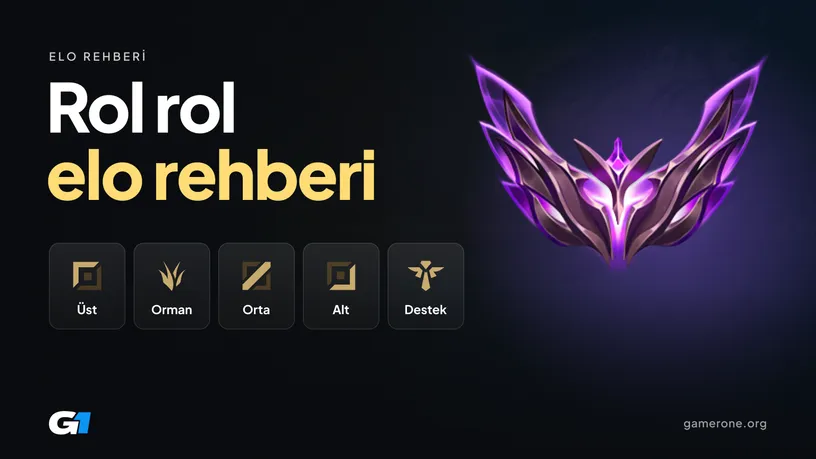
How to climb in LoL, role by role: improving with post-game data
 GamerOne Editör Ekibi
 3 min read
The fastest way to climb isn't playing more games, it's learning the right lesson from the games you play. Spending a few minutes after each match to look at what happened pays off far faster than repeating the same mistake for ten games. This guide starts with a review routine that works for every role, then covers what to focus on in each one.
What should you look at after a game?
- CS (creep score): Check how many minions per minute you took, especially in the first 10-15 minutes. Most of your gold and experience comes from here.
- Kill participation: How many of your team's kills were you part of? If it's low, you were either disconnected from the map or in the wrong place at the wrong time.
- Vision score: Placing wards and clearing enemy wards isn't only the support's job. Everyone's vision score affects control of the game.
- Deaths: Where and why you died matters more than how many times. Think through each death where you walked forward without knowing where the enemy jungler was.
- Damage and gold: Did you deal enough damage for the gold you had? Being ahead but having little impact often points to the wrong items or the wrong positioning.
One game doesn't tell you everything. Sometimes a bad game is just a bad game. What really matters are the trends across your last 10-20 games: do you always fall behind at the same point, do you keep dying in similar spots?
Top lane
- Wave management: Plan when to pull the wave to your tower and when to push it and recall. A badly timed recall costs you both minions and tower plates.
- Matchup knowledge: Know your opponent's power spikes and cooldowns; trade when their key ability is on cooldown.
- Map impact: If you take Teleport, look at where and when you used it. Did you spend it in lane, or did it win a teamfight?
Jungle
- Pathing plan: Before the game starts, plan which camp you start on, where you finish and which lane you gank first.
- Lanes with priority: Ganking lanes with wave priority, meaning they can push their minions before the opponent, is safer because your laner can move to help you.
- Objective timing: Track Dragon and other objective timers, and combine the moments you create lane pressure with objectives.
- Track the enemy jungler: Predicting where the enemy jungler is, is the most important information for both ganks and counter-ganks.
Mid lane
- Push and roam: Pushing the wave and moving to side lanes or your jungler is mid lane's biggest advantage. Always check the state of the wave before you roam.
- Vision: Mid is open to ganks from both sides. Vision on the river side will save you from many deaths.
- Resource management: Running out of mana or energy leaves you defenceless in lane. Before trading, make sure you have the resources to use your abilities.
Marksman (bot lane)
- CS is everything: Marksmen get most of their power from items. Minions missed over an unnecessary trade delay your item timings.
- Positioning: In teamfights, you need to stay safe to hit the closest enemy. If most of your deaths happen at the start of fights, look at your positioning.
- Sync with your support: Decide when to be aggressive based on your support's champion; their cooldowns are your windows too.
Support
- Vision control: Place your wards before objectives and clear enemy wards. Your vision score is a sign of how much information you give your team.
- Early level advantage: Who reaches level 2 first after the first waves can decide the first fight in bot lane.
- Roaming: When bot lane is safe, moving to mid or your jungler increases your impact on the map. Before you go, weigh the risk of leaving your marksman alone.
Pick one goal each week
Instead of trying to fix everything at once, focus on one goal each week. For example, look only at your CS in the first 10 minutes this week, and at where your deaths happen next week. A small, measurable goal makes progress easier to see.
How the AI Coach helps
When you link your Riot account in the GamerOne desktop app, your matches are tracked automatically. You can then do your post-game review with the AI Coach:
- "Ask the Coach" from a match: Ask from a match's details and the Coach answers about that specific match.
- Match turning point: Ask the Coach where the game slipped away.
- Build vs. your opponent and high-elo build: Check whether your item choices fit your opponent.
- Answers from your own data: "My goals", "Today's session" and "My weekly report" are answered with your own matches. You can also press "/" to pick a .