Download for Free


 G1 Plus

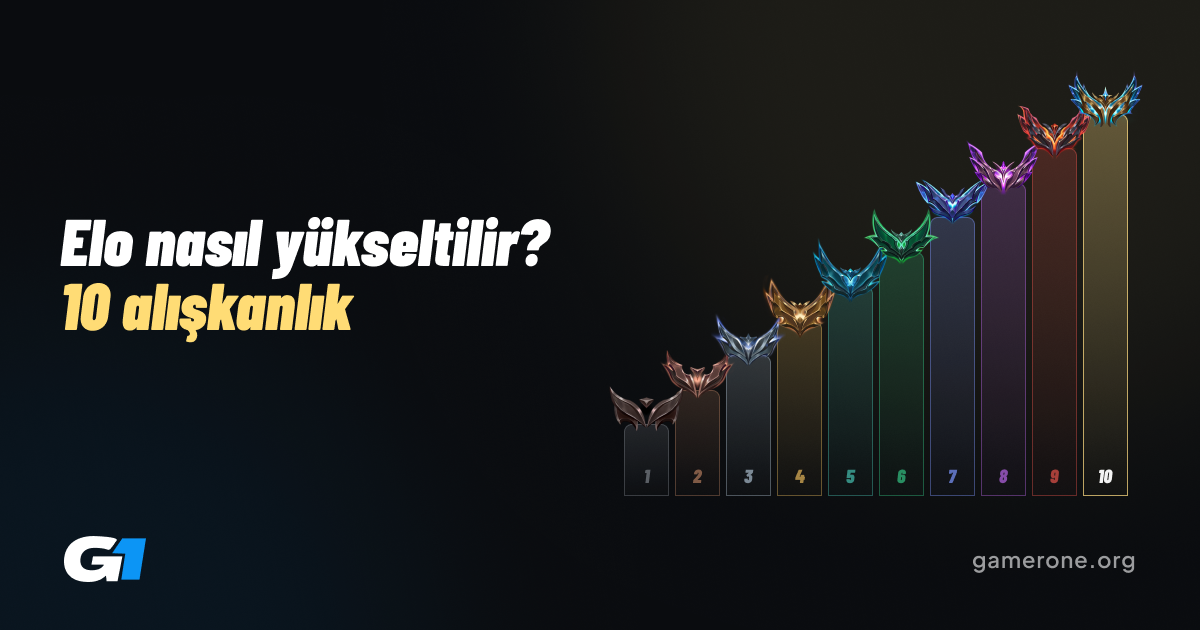
How to climb in League of Legends: 10 concrete habits you can use every game
 GamerOne Editör Ekibi
 5 min read
Most players stuck in ranked are mechanically good enough. The problem is usually the same mistakes repeating every game: unnecessary deaths, missed waves, showing up late to objectives and learning nothing from a loss. This guide covers 10 habits you can apply every game, whatever your role or rank. Don't try to change everything at once; focus on one or two per week.
Before the game
1. Narrow your champion pool
Three or four champions across two roles is enough to climb in solo queue. When you play a different champion every game, your head is busy with "what does this champion do again" and there is no room left to watch the map. Pair your main with one backup in case it is banned or taken, and keep everything else for normals. Before you bring a new champion into ranked, learn its basic combos and power spikes over a few normal games. Our tier list shows which champions are strong on the current patch.
2. Think about your matchup before the game starts
Spend 30 seconds on the loading screen: at what level is your opponent strong, which ability has a long cooldown, which side does their jungler like to gank? Even one plan, such as "they win level 2, so I'll play back on the first wave," cuts down mistakes in the first five minutes. To win the matchup in champion select, see our draft and counter pick guide.
3. Set a rule against tilt
Take a short break after two losses in a row. Queuing up angry after a loss usually means one more loss. A simple rule works: 15 minutes off after two losses, and no more ranked that day after a third.
During the game
4. Track your CS in the first 15 minutes
Most of your gold and experience comes from minions. If you win a fight and come back having missed two waves, you have given back the gold that fight earned you. Set a target for your role and check yourself at 10 and 15 minutes, not at the end of the game.
5. Learn the three basics of wave management
Wave management looks complicated, but three decisions cover most of it: shove the wave before you recall, keep the wave near your own tower when you are vulnerable to ganks or your opponent is stronger, and stack the wave into their tower when your opponent recalls. Knowing these three won't always win you lane, but it will stop you from losing it.
6. Ask one question before every risky step
"Where is the enemy jungler?" Most deaths come from someone you can't see on the map. If you don't know where you last saw the enemy jungler, stop before you walk past the middle of your lane. Not dying wins more games than getting kills, because every death gives the other team both gold and time on the map.
7. Prepare for objectives 45 seconds early
About 45 seconds before a dragon or Baron spawns, push your wave, recall to buy and put vision in the river. The team that arrives at the last second usually starts the fight without vision and with unspent gold. Those "nothing is happening" moments in pro games are exactly this preparation.
8. Close the game when you are ahead
Most leads are thrown because the team plays scattered. When you are ahead, pick one objective (a tower, dragon or Baron), go together, and after you take it, don't take pointless risks in side lanes. A team with a lead losing everything in one bad fight is one of the most common stories in solo queue.
After the game
9. Do a two-minute review after every game
You don't need to watch a full replay. Answer two questions: What was my most expensive death this game, and why did it happen? Where was my CS at 15 minutes compared with my target? Write the answers down. After three or four games you will see the same answer repeating; that is what you need to work on.
We go into which stats to check for each role in our role-by-role guide to climbing with post-game data.
10. Review your wins too
Looking at losses comes naturally, but your wins have mistakes too. You don't see them because the other team didn't punish them. At a higher rank, the same mistake gets punished. Ask the "most expensive death" question after a win as well.
How to track these habits
The hardest part of changing a habit is measuring whether it changed. Two simple methods help:
- Weekly focus: Pick one item from this list each week (for example, "check the jungler before stepping up") and focus only on that. At the end of the week, see whether your average deaths per game changed. If they did, move to the next item; if not, stay on the same one for another week. Rushing means the habit fades before it sticks.
- A short log: After every game, write one line: champion, result, most expensive mistake. After ten games, the list tells you what keeps repeating.
Frequently asked questions
How many games does it take to climb? There is no set number. As long as you repeat the same mistakes, game count alone won't move you up. A few reviewed games a day beat many games played on autopilot.
Which role is easiest to climb with? Each role affects the map differently. The best choice is the role you enjoy most and can play with the fewest champions.
Do mechanics or decisions matter more? In most ranks, decisions. Being in the right place at the right time wins more games than a clean combo.
Pre-match and post-match coaching
Items 2 and 9 on this list are the two habits players skip most: planning before the game and reviewing after it. GamerOne's AI Coach works exactly at those two moments. Before the match it sums up what to watch for in your matchup. After the match it reviews your deaths, CS and objective control and gives you two or three concrete things to try next game. It never steps in while you play; every decision stays yours.
Create a free GamerOne account and get your first post-game review
To talk about your games and progress with other players, join our Discord: discord.gamerone.org
GamerOne isn't endorsed by Riot Games and doesn't reflect the views or opinions of Riot Games or anyone officially involved in producing or managing Riot Games properties. Riot Games, and all associated properties are trademarks or registered trademarks of Riot Games, Inc.